

Quick answer
Zhangjiajie National Forest Park became China's first officially designated national forest park on September 25, 1982, covering 4,810 hectares within the larger Wulingyuan Scenic Area. The park achieved UNESCO World Heritage status in 1992 for its exceptional natural beauty and unique quartz-sandstone pillar formations. One pillar, the Southern Sky Column, was renamed Avatar Hallelujah Mountain in 2010 after director James Cameron confirmed the park's rock formations directly inspired the floating mountains in his film Avatar.
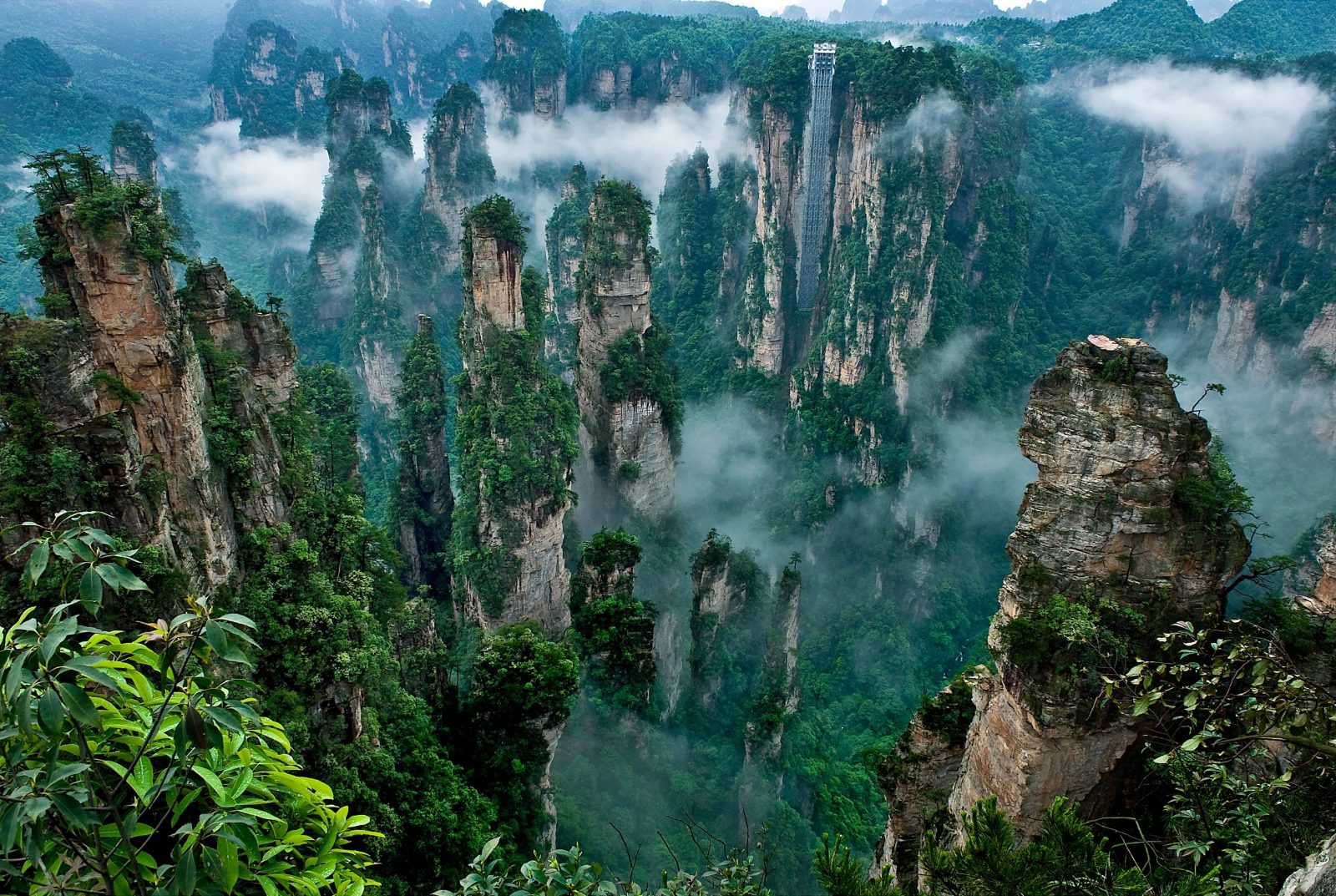
The quartzite sandstone pillars that define Zhangjiajie formed during the Devonian period, roughly 380 million years ago, when the region lay beneath a shallow sea. Tectonic forces lifted the seabed into a plateau, and subsequent erosion by wind, water, and freeze-thaw cycles carved the softer stone away, leaving behind the dense quartz columns that now dominate the skyline. The result is a landscape of narrow peaks separated by deep ravines, many shrouded in mist that rolls through the canyons and clings to the upper reaches of the pillars. Zhangjiajie national forest park facts extend beyond geology into cultural and administrative milestones. The park was carved from what had been a state-owned timber farm, and its 1982 designation marked a shift in China's approach to forest conservation. A decade later, the broader Wulingyuan Scenic Area—which encompasses Zhangjiajie, Suoxi Valley, and Tianzi Mountain—earned UNESCO recognition for its concentrated display of pillar karst topography and its biodiversity, including several endangered plant species found nowhere else. The park's infrastructure expanded significantly after 2009, when international attention surged following the release of Avatar and the subsequent renaming of the Southern Sky Column, a 1,080-meter pillar in the park's southern section. Visitors encounter the park's scale through a network of stone pathways, glass-floored observation platforms, and the Bailong Elevator, a 326-meter outdoor lift built into a cliffside that ascends in under two minutes. The park is divided into five scenic zones: Golden Whip Stream, Yaozi Village, Huangshi Village, Shadao Valley, and Pipa Stream. Golden Whip Stream runs for 7.5 kilometers along the valley floor, flanked by pillars on both sides, while Yuanjiajie plateau offers the most direct views of the Avatar-linked formations. The park's vegetation shifts with elevation—subtropical broadleaf forest at lower levels gives way to mixed evergreen and deciduous cover higher up, with winter frost occasionally dusting the upper peaks. Practical zhangjiajie national forest park facts matter as much as the geological narrative. The park operates year-round, though visibility fluctuates with seasonal weather patterns. Spring and autumn bring the clearest skies, while summer humidity often veils the pillars in dense fog. Winter sees fewer visitors and occasional snow, which outlines the rock faces but can close higher trails. The four-day entrance pass includes access to shuttle buses that connect the major zones, reducing the need to retrace routes on foot.
“The quartzite sandstone pillars that define Zhangjiajie formed during the Devonian period, roughly 380 million years ago, when the region lay beneath a shallow sea.”
Essential Zhangjiajie National Forest Park Facts: Opening Hours
Zhangjiajie National Forest Park operates on a consistent daily schedule throughout the week to facilitate visitor access.
| Monday | 07:30–17:00 | |
|---|---|---|
| Tuesday | 07:30–17:00 | |
| Wednesday | 07:30–17:00 | |
| Thursday | 07:30–17:00 | |
| Friday | 07:30–17:00 | |
| Saturday | 07:30–17:00 | |
| Sunday | 07:30–17:00 |
Timing Your Visit: Zhangjiajie National Forest Park Facts for Optimal Arrival
The best arrival window is 07:30–09:00, as arriving early helps avoid peak crowds and ensures sufficient time to explore major scenic areas. Planning your visit during shoulder months balances manageable visitor numbers with favorable weather conditions.
Spring (April–May)
Moderate crowds15°C to 24°C; lush vegetation. Spring offers clear visibility for viewing the sandstone pillars before the summer humidity sets in.
Autumn (September–October)
Moderate to high12°C to 22°C; stable conditions. October provides crisp air and autumn foliage, though it is busier than spring.
Winter (December–February)
Low crowds-2°C to 8°C; potential snow. Winter offers the fewest visitors, though some paths may close due to icy conditions.
Weekday mornings
Low to moderate—
Arriving during the recommended best arrival window on weekdays significantly reduces wait times at elevators and cable cars.
Verdict: For the most balanced experience, visit Tuesday to Thursday during the 07:30–09:00 arrival window in April or October.
Geological Zhangjiajie National Forest Park Facts
Zhangjiajie National Forest Park is recognized for its unique sandstone pillar landscape and significant ecological diversity. It serves as a core component of the Wulingyuan Scenic and Historic Interest Area.
1982 establishment date
This site became China's first national forest park in 1982, marking a major step in the country's nature conservation efforts.
1992 UNESCO recognition
The park was inscribed as a UNESCO World Heritage Site in 1992 as part of the Wulingyuan Scenic and Historic Interest Area.
3,000 quartzite sandstone pillars
The park contains over 3,000 distinct sandstone pillars and peaks, many of which rise more than 200 meters in height.
Quartzite sandstone composition
These geological formations are primarily composed of Devonian-aged quartzite sandstone, shaped by millions of years of water erosion and weathering.
Vertical vegetation zones
The landscape supports a high degree of biodiversity, with vegetation clinging to the near-vertical walls of the pillars.
Diverse ecosystem habitat
The forest area provides a protected habitat for several endangered species, including the Chinese giant salamander and the clouded leopard.
Key Sightseeing Zones: Zhangjiajie National Forest Park Facts
Zhangjiajie National Forest Park is divided into several distinct scenic zones, each offering unique geological features and perspectives of the sandstone pillars. Navigating these primary areas helps visitors structure their route through the vast park landscape.
Yuanjiajie
This area is known for its high-altitude sandstone pillars, including the Southern Sky Column which inspired floating mountain imagery. It is centrally located and connects to the Bailong Elevator.
Visit early to photograph the Hallelujah Mountain before tour groups arrive.
Tianzi Mountain
Characterized by high peaks and deep valleys, this zone offers a panoramic view of the surrounding forest landscape. It is accessible via the Tianzi Mountain Cable Car.
Walk to the Yubi Peaks viewpoint for the best vertical compositions.
Golden Whip Stream
Located in the valley floor, this stream offers a shaded path beneath towering rock formations and dense vegetation. The trail spans approximately 7.5 kilometers.
Walk along the stream in the afternoon to enjoy cooler temperatures.
Yellow Stone Village
As one of the larger sightseeing platforms in the park, this area features various lookout points reachable by foot or cable car. It provides a comprehensive view of the surrounding peaks.
Complete the circular cliff-top path to see every major rock formation.
Ten-Mile Gallery
A scenic corridor featuring a series of rock formations that resemble various figures and creatures. Visitors can traverse this area on foot or via a small electric tram.
Ride the tram first, then walk back to photograph rock formations.
Arrival Logistics: Zhangjiajie National Forest Park Facts
Zhangjiajie National Forest Park is located in the Wulingyuan District of Zhangjiajie City, Hunan Province. Visitors typically arrive via Zhangjiajie Hehua International Airport or Zhangjiajie West Railway Station before transferring to local transport to reach the park entrances.
Shuttle bus from Zhangjiajie Central Bus Station to Wulingyuan Bus Station
Direct transfer from Zhangjiajie Hehua International Airport to Wulingyuan entrance
Private transfer via S10 Zhangjiajie-Huayuan Expressway
Check availability
Essential Zhangjiajie National Forest Park Facts
Everything you need to know about zhangjiajie national forest park facts