

Quick answer
Zhangjiajie National Forest Park offers vertical cliff-edge walkways, cable car rides to summit viewpoints, forest canyon hikes, and access to the Bailong Elevator and Zhangjiajie Glass Bridge. The 4-day entrance pass allows time to explore Yuanjiajie, Tianzi Mountain, Golden Whip Stream, and Yangjiajie scenic areas. Most visitors dedicate two to three days to cover the primary viewpoints and trails without rushing.
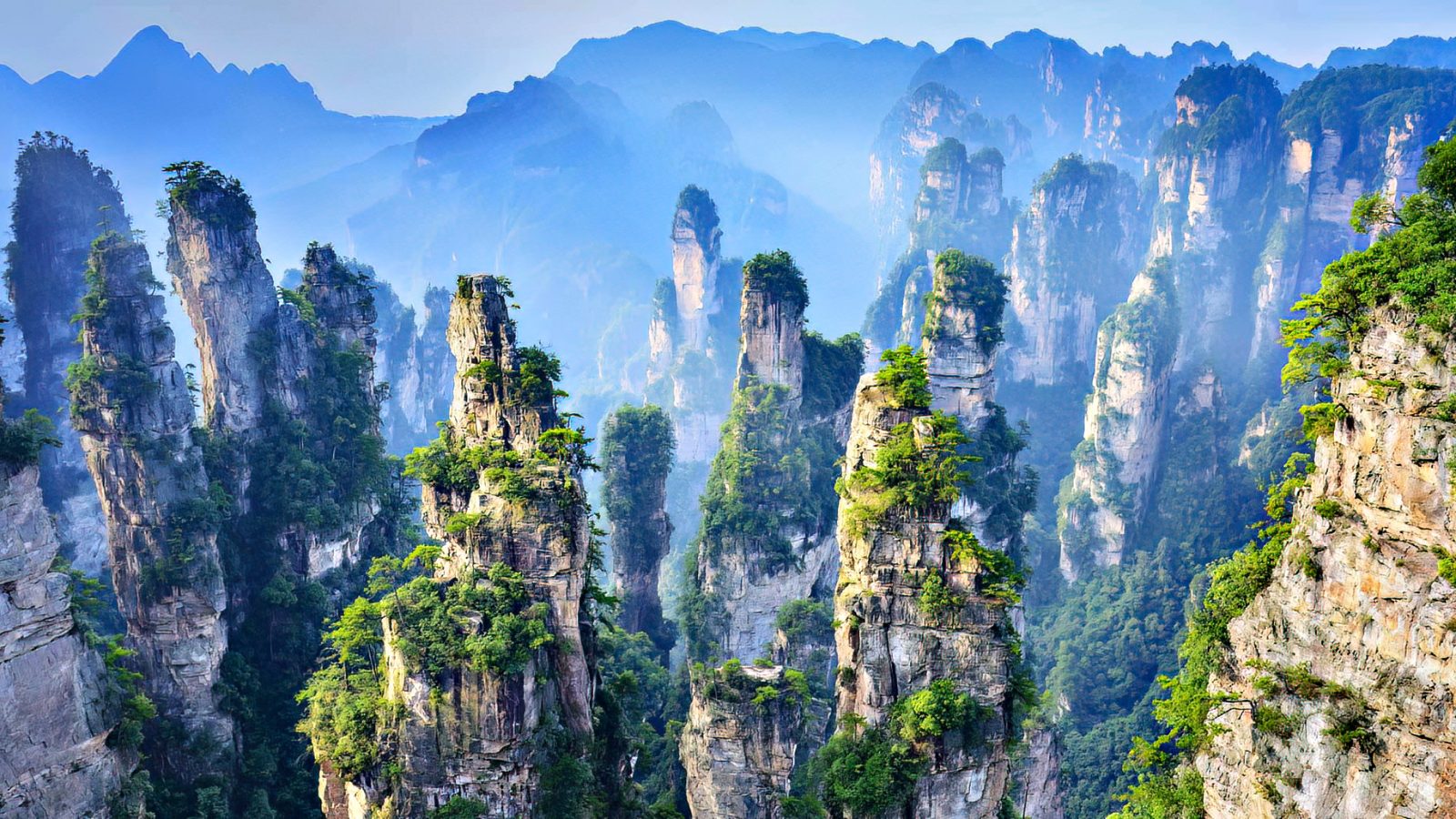
The quartzite sandstone pillars that define Zhangjiajie erode at a rate measurably slower than limestone karst, which is why the formations retain near-vertical walls rather than rounded slopes. This geology determines what to do in Zhangjiajie National Forest Park: the infrastructure is built around vertical access rather than horizontal distance. Yuanjiajie Scenic Area sits atop the plateau and is reached via the Bailong Elevator—a glass-sided lift that ascends 326 meters along a cliff face in under two minutes. From the upper station, paved walkways loop past the Southern Sky Column, the free-standing pillar that inspired the Hallelujah Mountains in Avatar. The loop takes 90 minutes at a moderate pace and requires no climbing. Tianzi Mountain, accessible by cable car or foot trail, offers wider vistas across the stone forest but draws larger crowds in the late morning. The summit platforms face northwest, making early afternoon the preferred window for photography when the sun is behind you. Golden Whip Stream follows a 7.5-kilometer canyon floor between vertical rock faces, with a paved path that runs beside the water. The trail is flat, shaded, and passable in standard footwear. Macaques frequent the lower sections near the park entrance; they are habituated to visitors but should not be fed. The stream walk connects to the trailhead for Yuanjiajie if you prefer to hike up rather than take the elevator—a climb of 3,700 steps over two hours. Yangjiajie and袁家界 remain less developed than Yuanjiajie and Tianzi, with narrower paths and fewer guardrails. The One-Step-to-Heaven Bridge in Yangjiajie is a natural rock span ten meters long and less than one meter wide, suspended between two pillars. Access requires a short detour from the main loop and is sometimes closed in wet conditions. The Zhangjiajie Grand Canyon Glass Bridge lies outside the main forest park boundary, 30 minutes by shuttle, and requires a separate ticket; it spans 430 meters at a height of 300 meters and is engineered to sway slightly under load. Park eco-buses circulate between scenic zones on fixed routes with stops announced in Mandarin and English. The buses are included in the 236 CNY entrance pass and run continuously during operating hours. Visitors structure their days around bus connections rather than point-to-point walking, since horizontal distances between zones exceed practical hiking range. Cell signal is reliable at major viewpoints but drops in canyon sections; download offline maps before entering.
“The quartzite sandstone pillars erode at a rate measurably slower than limestone karst, which is why the formations retain near-vertical walls rather than rounded slopes.”
The Best Time to Visit and What to Do in Zhangjiajie National Forest Park
The optimal time to visit Zhangjiajie National Forest Park is during the shoulder seasons of April, May, September, and October, when moderate temperatures facilitate extensive exploration. Regardless of the season, visitors should prioritize the best arrival window: 07:30–10:00 — Arrive early to beat large tour groups and maximize daylight for exploring the park.
Weekday mornings
Minimal congestion—
Visiting on weekdays allows for a quieter experience on popular trails and transport lines.
April and May
Moderate to heavyMild, 15°C–25°C
Spring offers comfortable temperatures and lush vegetation, though rainfall is more frequent.
September and October
High, but manageableCool and dry, 12°C–22°C
Autumn provides stable weather and clear visibility, making it the most favorable period for photography.
Verdict: For the most balanced experience, aim for Tuesday to Thursday arrival within the 07:30–10:00 window during the months of April or October.
Opening Hours for What to Do in Zhangjiajie National Forest Park
Zhangjiajie National Forest Park operates on a consistent daily schedule throughout the week.
| Monday | 07:30–17:00 | |
|---|---|---|
| Tuesday | 07:30–17:00 | |
| Wednesday | 07:30–17:00 | |
| Thursday | 07:30–17:00 | |
| Friday | 07:30–17:00 | |
| Saturday | 07:30–17:00 | |
| Sunday | 07:30–17:00 |
Key Natural Landmarks: What to Do in Zhangjiajie National Forest Park
Zhangjiajie National Forest Park features distinct geological zones shaped by erosion and unique quartz-sandstone formations. Prioritizing these landmarks helps visitors navigate the expansive Wulingyuan area effectively.
Yuanjiajie
This area is home to the Southern Sky Column, which inspired the floating mountains in film. The terrain offers extensive paths along high-altitude cliff edges.
Walk the Bailong Elevator platform early to avoid peak wait times.
Tianzi Mountain
Known for its high density of jagged peaks and sea of clouds, this zone provides expansive panoramic views. It is accessible via a long cable car ascent.
View the Imperial Brush Peaks from the platform near the exit.
Golden Whip Stream
Running through the valley floor, this path provides a shaded walk beneath massive rock pillars. It offers a perspective on the vertical scale of the park.
Walk the full length in the afternoon when forest temperatures drop.
Ten Mile Gallery
A narrow valley featuring a series of rock formations that resemble historical figures and natural objects. An electric tram runs the length of the trail.
Ride the tram to the end then walk back for details.
Huangshi Village
This elevated plateau offers a circular walking trail with diverse viewpoints overlooking the surrounding forest. It is generally quieter than other major zones.
Complete the loop in a clockwise direction for better lighting.
How to Structure Your Itinerary: What to Do in Zhangjiajie National Forest Park
The park's 4-day pass lets you explore at a comfortable pace across multiple zones. This sequence prioritizes major formations and viewpoints while allowing time for cable car queues and transfers.
Yuanjiajie Scenic Area
Take the Bailong Elevator up to Yuanjiajie to see the Avatar Hallelujah Mountain and natural stone bridges. Budget 3-4 hours including the eco-bus ride from the entrance.
Tianzi Mountain
Transfer via cable car or eco-bus to Tianzi Mountain for panoramic ridge views and the Imperial Brush Peaks. Allow 2-3 hours before the last shuttle back.
Golden Whip Stream
Walk the 7.5 km valley trail along the stream, passing Welcoming-Guest Pine and Splitting Mountain to Save Mother. This level path takes 2.5-3 hours at a relaxed pace.
Ten-Mile Gallery
Board the small sightseeing train or walk the paved route to see formations like Three Sisters Peak. The full loop takes 1-2 hours.
Yangjiajie Scenic Area
Hike to Wulong Village and One Step to Heaven for less-crowded sandstone pillars. The trails here are steeper and require 4-5 hours round trip.
Huangshi Village
Return for sunrise views from the upper plateau, accessible by cable car or a 2-hour climb. Visit the Five Finger Peaks and Star Picking Terrace before heading out.
Logistics and Access: What to Do in Zhangjiajie National Forest Park
Zhangjiajie National Forest Park is located in the Wulingyuan District. Travelers typically begin their journey from Zhangjiajie City or the Zhangjiajie Hehua Airport.
Central Bus Station to Wulingyuan Entrance
Zhangjiajie City to South Gate
Zhangjiajie Hehua Airport to Zhangjiajie Central Bus Station
Essential Pre-Visit Checklist for What to Do in Zhangjiajie National Forest Park
Prepare these essentials before your visit to ensure smooth entry and safe exploration of the park's rugged terrain.
-
Bring your passport or Chinese ID card — Required for ticket purchase and park entry verification.
-
Wear sturdy hiking shoes with ankle support — Trails include steep stone steps and uneven mountain paths.
-
Pack a lightweight rain jacket — Weather shifts quickly at elevation, even on clear days.
-
Charge your phone and bring a power bank — You'll need it for navigation, photos, and the multi-day pass QR code.
-
Download offline maps of the park — Cell service is unreliable in remote valleys and on cable car routes.
-
Carry sufficient cash for small vendors — Not all food stalls and souvenir stands inside accept mobile payments.
Check availability
Frequently asked questions about visiting Zhangjiajie National Forest Park
Everything you need to know about what to do in zhangjiajie national forest park